I want to start by saying that I have never, in 62 years of living, considered myself a dramatic person.
I raised David on my own after his father left when he was seven.
There are moments from those early years that still come back to me with painful clarity. For instance, the memory of David standing in the hallway with his backpack on, asking if his father was coming for his birthday.
The memory of David pretending not to notice when I watered down soup so it would stretch one more night, and David falling asleep at the kitchen table while I ironed my work blouse beside him, because he said he didn’t like going to bed until I was finished.
I never told him how scared I was.
I never let him see the unpaid bills tucked under the fruit bowl or the way I sometimes sat in my car for five minutes before walking into the house, gathering enough strength to smile.
I worked two jobs through most of his childhood, made his school lunches every morning without exception, showed up to every single event with a folding chair and a thermos of coffee, and never once asked him to feel guilty about any of it.
That’s not the kind of mother I was. I loved him quietly and completely, and asked for very little in return.
When he married Chloe four years ago, I made a decision early on to be the kind of mother-in-law who stays in her lane.
I didn’t offer unsolicited opinions.
I didn’t drop by unannounced. I didn’t comment on her parenting or her cooking or the way she decorated their home, even when she repainted the guest room a color that looked like the inside of a pistachio shell.
I smiled and said it was lovely, and I meant it, because what mattered to me was David, and what mattered to David was his family.
When Leo was born three years ago, I fell in love the way grandmothers do.
He had David’s eyes and a laugh that started somewhere deep in his belly and took over his whole face, and from the very first week I held him, I understood that this child was going to be the best part of whatever years I had left.
I visited on the schedule Chloe set. I brought gifts she approved in advance. I learned which shows Leo was allowed to watch, which foods he preferred, and what his nap schedule looked like on any given day of the week.
I was careful and considerate. I tried, genuinely and consistently, to be exactly the grandmother Chloe would find acceptable.
Looking back now, I wonder if that was ever actually possible.
The tension with Chloe was never one dramatic thing.
It was a collection of small things, the kind that are individually dismissible but accumulate over time into a pattern you can’t stop seeing once you’ve noticed it.
It began with the way she would go quiet when I held Leo too long and the way certain invitations arrived with enough notice to be technically given, but not enough to actually plan around. I even noticed it in the way she would repeat my suggestions back to David later as her own ideas, or contradict my stories about David’s childhood in front of other people with a cheerful confidence that suggested she found my memory unreliable.
Once, at a family barbecue, I mentioned that David had been afraid of thunderstorms until he was nearly ten.
It was a harmless memory, the kind mothers carry around without thinking.
Chloe laughed lightly and said, “That doesn’t sound like David at all. He told me he was never scared of storms.”
Everyone moved on, but I remember David looking down at his plate instead of correcting her.
Another time, I brought over a small wooden puzzle I had found at a thrift shop because Leo had been fascinated with shapes.
Chloe thanked me, set it on the counter, and said he already had plenty of toys. Two weeks later, I saw the same puzzle on the living room rug while she told David, “I found this for him. Isn’t it perfect for his fine motor skills?”
I didn’t say anything.
I told myself it wasn’t worth making things uncomfortable over a toy.
David noticed some of it. I know he did, because occasionally he would call me the day after a visit and apologize in that vague, careful way of someone who can’t quite bring himself to name what he’s apologizing for.
I always told him it was fine. I always meant it as a kindness, and I’m now not sure it was.
Two months ago, Chloe mentioned she was thinking about cutting back on my visits. She framed it as being about Leo’s schedule and the importance of routine, which was reasonable enough that I couldn’t argue with it without seeming unreasonable myself.
We agreed on once a week, on Tuesday afternoons, for three hours.
I accepted it without complaint and told myself that something was better than nothing and that patience was the only tool available to me.
The Tuesday visits became the thing I looked forward to most. I would spend Monday evening baking something simple.
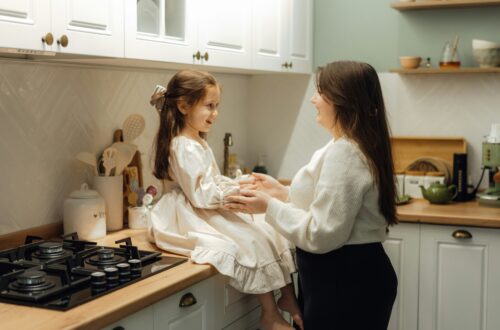
Leo was going through a phase where he wanted to help in the kitchen, or at least wanted to stand beside me and hand me things and feel involved. I would arrive at two o’clock, and we would spend the afternoon doing small, ordinary things that felt enormous to me.
Leo had a way of making everything feel important.
If we built a tower, he insisted I count each block out loud before he knocked it down. If we read a book, he corrected me when I skipped a page, even by accident. When we went outside, he would take my hand and lead me to the same patch of grass near the fence, where he had once seen a ladybug and now believed ladybugs must surely live forever.
Sometimes he would look up at me in the middle of playing and say, “Grandma, you stay?”
And every time, even though I knew exactly when I had to leave, I would smile and say, “For a little while, sweetheart.”
Those three hours were never enough.
But they were mine, and I learned to be grateful for them.
Building block towers. Reading the same three books repeatedly because he had favorites he never tired of. Sitting in the backyard while he ran in circles for reasons known only to him.
Chloe was usually out during those visits. That was also her arrangement, not mine.
She told David she needed the time for errands and appointments, and I understood that our three hours served a practical purpose for her as much as an emotional one for me.
I didn’t take it personally.
At least, I tried not to. The truth was, I knew those visits existed partly because they were useful. Chloe needed someone she trusted enough to watch Leo but not enough to fully welcome into the family circle. I was allowed in for a window of time, and only within the borders she had drawn.
Still, when Leo ran to the door shouting my name, it was easy to forget all that. For three hours, I wasn’t an inconvenience or a tolerated obligation.
I was just his grandmother.
In all the weeks of those Tuesday visits, Chloe had never once mentioned an allergy. I had asked — specifically, carefully, more than once — because I was making food and bringing it, and I needed to know.
She told me Leo had no dietary restrictions. She said it plainly and without qualification, and I had no reason to doubt it, so I didn’t.
The cookie was an oatmeal cookie.
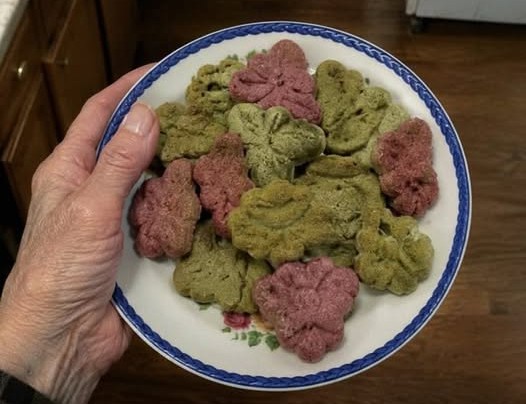
I had made a small batch on Monday evening, the kind I had been making for 40 years with oats, butter, and a little brown sugar.
Leo helped me put the chocolate chips in, or tried to, mostly eating them one by one while I pretended not to notice. I wrapped two cookies in a napkin and brought them on Tuesday because he had specifically, repeatedly asked for them.
We were sitting at the kitchen table when I gave him one.
He ate it with complete concentration, the way children eat things they genuinely enjoy.
“More cookie?” Leo asked hopefully, already reaching toward the napkin.
I laughed. “You really liked it that much?”
He nodded so hard his curls bounced.
“More cookie.”
I glanced at the second one. “How about we save this one for later?”
His face fell for a moment.
“Later?” he repeated.
“Later,” I promised. “If you eat all your dinner tonight, maybe Mommy can give it to you after.”
He considered this very seriously, as though negotiating an important business agreement.
“Okay,” he said finally.
I folded the napkin around the second cookie and slid it farther onto the table.
“You know,” I said, “your daddy used to ask for second cookies too.”
Leo giggled.
“Daddy cookie?”
“Daddy loved cookies.”
Before I could tell him more, I heard the sound of the front door opening.
Chloe was home nearly 40 minutes earlier than usual.
She walked into the kitchen, looked at the napkin on the table, the crumbs in front of Leo, and her expression changed so suddenly and completely that for a moment I genuinely didn’t understand what I was seeing.
“What did you give him?” she said.
“An oatmeal cookie,” I said. “Homemade. I make them every—”
She picked Leo up from his chair so fast that he startled and looked confused.
“You poisoned him,” she said. Her voice had gone very high and very strange. “He has a severe gluten and dairy allergy. He could go into anaphylactic shock. How could you do this?”
I stood up from my chair. “Chloe, you never told me he had any allergies. I asked you specifically, multiple times—”
“Get out of my house,” she said.
“I didn’t know. I would never knowingly—”
“GET OUT.”
She was already on the phone by the time I reached for my bag, and I could hear her talking to David.
At that point, I stood in the kitchen of my son’s house feeling something I had never felt before in relation to my own family — a complete and disorienting sense of unreality, like the ground had shifted and I was still trying to stand on where it used to be.
By the time David arrived home, my suitcase was on the wet driveway.
I don’t know exactly when Chloe had found the time to pack it, but there it was, sitting in a shallow puddle, and she was on the porch with Leo on her hip telling David that if his mother set foot back in that house she would take Leo and leave and he would spend the rest of his life explaining to his son why he had chosen a cookie over his family.
David stood between us on the front path, and I watched him — my son, the boy I had raised alone, who I had folded myself around for 30 years — make a decision.
He looked me in the eye.
“Mom,” he said, “I need you to go. Just for now, just until we figure this out. For Leo’s safety.”
I picked up my suitcase. I didn’t say anything because there was nothing to say that wouldn’t make it worse, and making it worse was not in my nature.
I drove to a motel 11 minutes away and sat on the edge of a bed with a polyester comforter and cried until I was too tired to continue.
Then, I lay down in my clothes and stared at the ceiling until it got light outside.
My phone rang at 7:15 in the morning.
David’s name was on the screen. I answered before the second ring.
“Mom.” His voice was wrong immediately — tight and shaking in a way I had only heard a few times in his life, the voice he used when something had genuinely frightened him.
“What happened?” I said. “Is Leo alright?”
“Leo is fine,” he said. “Leo was always fine.” A pause. “Mom, I need to tell you something, and I need you to just let me get through it.”
He told me he had gone to Chloe’s laptop to find the name of Leo’s pediatrician, wanting to call first thing in the morning and understand the allergy protocol.
The laptop was already open.
On the screen was a PDF editing program, and in the program was Leo’s wellness report from his last checkup, a completely normal document, with the original text partially visible beneath the edits.
Chloe had altered it. She had typed a diagnosis over the existing text, changed the formatting to match the original document’s font, printed it out, and filed it in the folder where they kept Leo’s medical records.
There was no allergy. There had never been an allergy.
I sat on the edge of that motel bed and felt relieved. Finally, there was proof that I didn’t “poison” my grandson.
“David,” I said. “Come and get me. Bring me home. Please.”
The silence that followed was long enough that I understood, before he said a single word, that the conversation was going somewhere I wasn’t prepared for.
“Mom,” he said slowly. “I can’t.”
I didn’t speak.
“I know what she did. I know you didn’t do anything wrong. I know all of it.” His voice cracked slightly and then steadied itself. “But if I confront her with this, she will leave. She will take Leo, and I will lose my son. And I can’t… Mom, I can’t do that.”
“David—”
“I’m sorry,” he said. “I’m so sorry. I just… I need you to understand that this isn’t about not loving you.”
“Then what is it about?” I asked.
My voice was very quiet.
He didn’t have an answer for that. Or maybe he did and couldn’t say it out loud. We stayed on the phone for another few minutes, saying things that didn’t matter around the edges of the thing that did.
Then, he said he had to go and hung up.
I sat in that motel room for a long time after the call ended.
My son had held the proof of my innocence in his hands. He had known, with complete certainty, that I had done nothing wrong and that I had been deliberately and maliciously lied about.
And he had called me not to bring me home but to explain, as gently as he could manage, that he was going to let the lie stand anyway.
I am 62, and I have survived things I didn’t think I would survive.
I have learned that heartbreak takes many different shapes. Some of them are loud, and some are quiet.
The quietest ones, in my experience, are the ones where someone who loves you makes a fully conscious choice, and you understand, listening to them make it, that there is nothing you can do or say to change it.
I checked out of the motel that morning.
I drove home to my own house, made coffee in my own kitchen, and sat at my table for a long time thinking about Leo’s laugh and the chocolate chips he had eaten one by one and the way he had looked at me at the end of our last Tuesday visit, waving from the window as I backed out of the driveway.
I don’t know what happens next. I’m writing this because I needed to put it somewhere outside of my own head, and because I suspect I’m not the only grandmother sitting alone in her kitchen with this particular kind of grief.
If you’ve been here, you know what I mean. And if you haven’t, I hope you never do.